
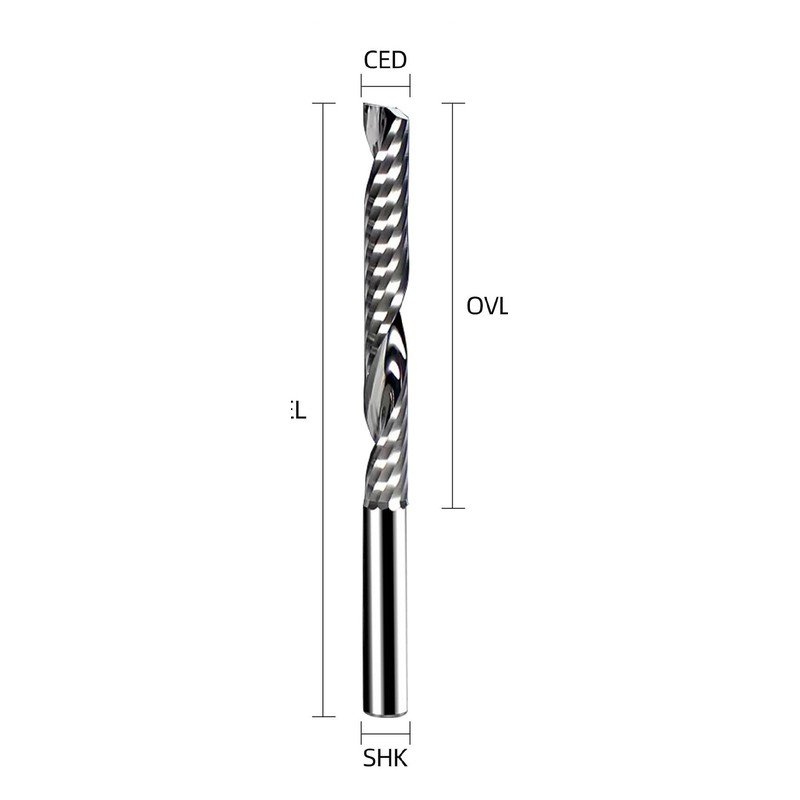
Single-Flute vs Two-Flute Router Bits: Which Should You Use?
“Should I use a single flute or a two flute bit for this job?” is one of the most common questions we get from CNC operators, and the honest answer is that there is no universally correct choice — but there is a clear decision rule. If you understand what the flute count actually does, you can pick correctly in about thirty seconds for any material and application.
This guide explains the trade-off behind the two designs, gives a selection table you can keep beside your machine, and a simple testing method to confirm the choice on your own setup.
Quick answer: a single flute removes more chip volume and cuts cooler, which is why it wins in plastics, deep slots and low-power machines; two flutes divide the same feed between two edges, giving a finer finish and longer edge life in wood and panels. Choose by material first, then by your machine’s rigidity and the finish you need.
What the Flute Count Actually Does
A flute is a cutting edge plus its chip channel. The flute count changes two things: how many times the edge cuts per revolution, and how much room each channel has to carry chips away.
- A single-flute bit has one cutting edge and one large chip channel. Each rotation removes one chip, and that chip has a big, unobstructed path out of the cut. Chip evacuation is excellent.
- A two-flute bit has two cutting edges and two smaller channels. Each rotation removes two chips, so the same feed rate gives a lighter cut per edge — which means a smoother surface. But each channel carries less, so evacuation is less forgiving in deep or aggressive cuts.
Think of it as a trade-off between chip removal and surface finish. Single flute clears chips; two flutes smooth the cut. The right choice depends on which constraint bites first in your application.
When a Single Flute Wins
Choose a single-flute bit when the material or the cut generates chips that need to get out fast:
- Plastics — acrylic (PMMA), PVC, polycarbonate. Melted plastic chips stick and re-weld to the edge if they stay in the cut. A single-flute bit’s big gullet pulls the hot chip out in one clean spiral, which is why single-flute and O-flute designs dominate plastic cutting.
- Deep slotting and grooving. The deeper the cut, the harder it is to clear chips from the bottom. Deep slots in MDF or plywood are a classic two-flute failure: chips pack in the gullets, heat builds, and the bit burns the walls.
- Composite panels (ACM, aluminium composite). Similar logic to plastics — chip packing and heat are the failure modes, and a single flute removes the material before it becomes a problem.
- Less rigid machines and spindles. A single cutting edge engages less material per revolution, so it produces lower cutting forces. On lightweight routers, a single-flute bit is more forgiving than a two-flute bit at the same material removal rate.
When Two Flutes Win
Choose a two-flute bit when surface quality and production speed matter more than chip clearing:
- Wood, MDF, plywood and fibreboard. These materials cut cleanly and their chips are relatively easy to move. Two cutting edges give a finer finish per revolution, and the balanced geometry cuts with less vibration.
- Through-cuts with a clean top edge. Two flutes engage the surface twice per revolution, leaving a more consistent edge finish on panels.
- Production runs where finish speed matters. At the same feed rate, a two-flute bit takes a lighter bite per edge, so you can push the feed higher before the surface degrades — higher productivity without sacrificing quality.
- Finishing passes. When the final pass needs the best possible surface, two flutes leave a finer pattern of cutter marks, which means less sanding afterwards.
Quick Selection Table
| Application | Best choice | Why |
|---|---|---|
| Acrylic, PVC, polycarbonate | Single flute | Big gullet clears melted chips, prevents rewelding |
| Deep slots / grooving | Single flute | Chips must clear the full depth of cut |
| Composite panels (ACM) | Single flute | Prevents chip packing and heat build-up |
| Lightweight / hobby machines | Single flute | Lower cutting forces, more forgiving |
| Wood, MDF, plywood panels | Two flute | Better finish, balanced cutting |
| Production runs, finishing passes | Two flute | Lighter bite per edge, higher feed, smoother surface |
| General-purpose one-bit setups | Two flute | Most flexible across wood applications |
A useful rule of thumb: if the material melts or chips pack, go single flute. If you are cutting wood and want the smoothest finish, go two flute.
Both geometries are part of a balanced toolkit. YINGBA manufactures both a single-flute range — including left-hand, coated and compression variants — and a two-flute spiral range for wood and panel processing. If you are setting up a new machine or a new material, contact us with the application and we will confirm the right start.
How to Test on Your Own Machine
No chart can replace ten minutes of testing on your actual machine, because rigidity, spindle quality and workholding change the outcome. Here is a repeatable method:
- 1. Start at the middle of the recommended range. Use the starting values for your material (see our speed and feed guide and the YINGBA calculator), and set the feed in the middle of the range.
- 2. Listen and look. A clean cut is steady and quiet with consistent chips. If you hear chatter or squeal, or see a rough edge, the feed is too high — or the bit is not right for the material.
- 3. Check the edge and the bit. A good cut leaves a clean edge and a bit that is warm, not hot. If the bit is hot, the chip load is too low — it is rubbing, not cutting.
- 4. Push the feed up gradually. Increase feed until the first sign of trouble (edge quality drop, sound change), then back off about 10%. That is your practical maximum for that material, bit and machine combination.
- 5. Record it. Keep a one-line note per material and tool: bit type, diameter, RPM, feed, step-down. In a few weeks you will have a reference table tuned to your own machine — more valuable than any generic chart.
The Bottom Line
Single flute when chips need to get out (plastics, deep cuts, light machines); two flutes when finish and speed matter (wood, panels, production). If you are still unsure, the safe starting point for most CNC operators is a single-flute bit for plastics and a two-flute spiral for wood — and the ten-minute test above will tell you the rest.
FAQ
Is a single-flute or two-flute bit better for acrylic? Single flute. The large chip channel clears the soft chip before it can re-weld to the edge, and lower cutting forces suit acrylic’s tendency to melt and crack.
Which gives a better surface finish — single or two flute? Two flutes, at the same feed per tooth. The second edge removes the witness mark left by the first, which is why two-flute spirals finish wood and panel edges more cleanly.
Can I run a two-flute bit in plastic? You can, if you raise the feed so each edge still takes a real chip. If the machine cannot reach that feed, a single flute is the safer choice — otherwise the edge rubs and the plastic melts.
Why do single-flute bits clear chips better? With one flute, the open space in the groove is roughly double that of a two-flute design at the same diameter, so chips leave the cut instead of being re-cut.
Need help choosing between the two for your application? Contact YINGBA with the material, tool diameter, cutting length and machine type — our team reviews the application and confirms the recommendation before you order.
YINGBA manufactures solid carbide router bits and CNC carving tools for distributors, manufacturers and OEM/ODM projects worldwide. Standard models are kept in stock; custom geometry, coatings, marking and packaging are produced to your drawings.
Leave a Reply