
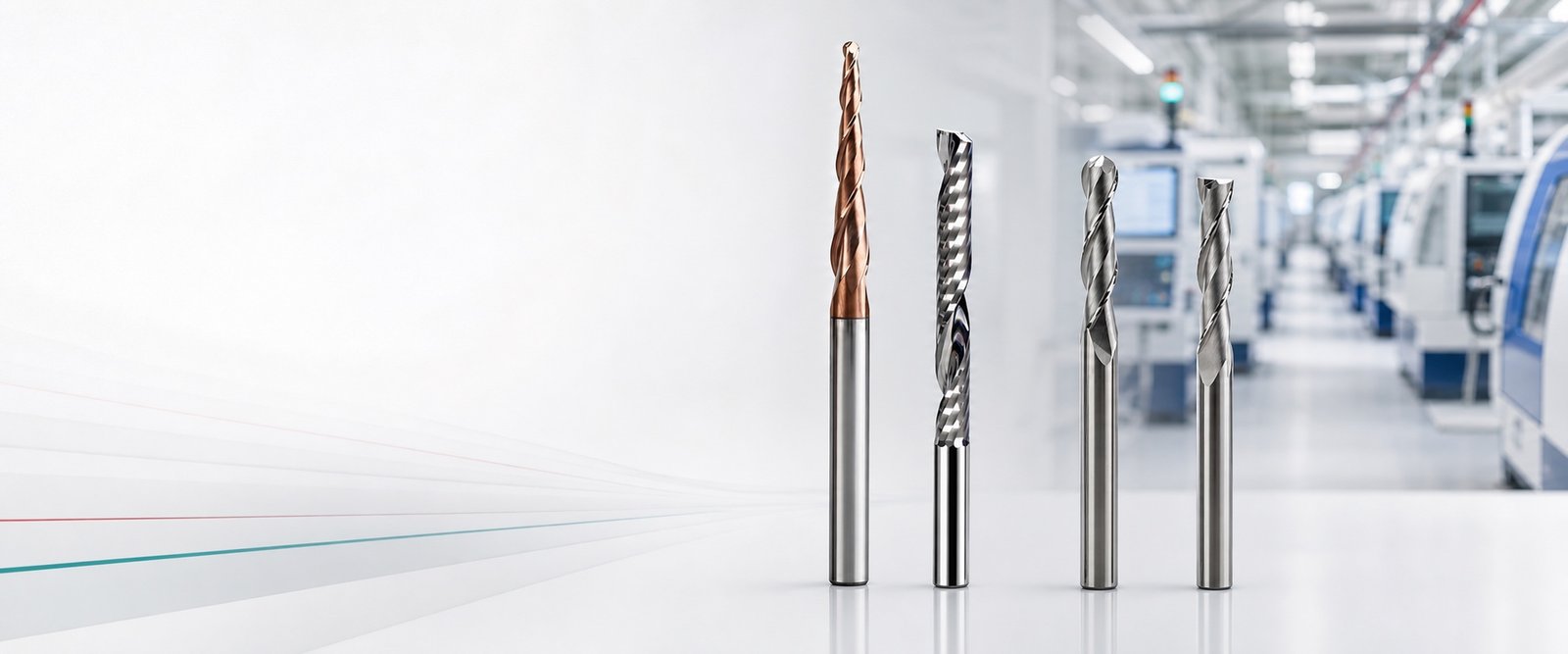
How to Choose the Right Router Bit for MDF and Acrylic Cutting
MDF (Medium Density Fiberboard) and acrylic are two of the most common materials processed on CNC routers, but they place very different demands on cutting tools. Using the wrong bit geometry results in poor surface finish, rapid tool wear, or scrapped workpieces.
Quick answer: for MDF, use a sharp micro-grain or coated two-flute up-cut spiral (compression for faced panels) and prioritise dust extraction; for acrylic, use a single-flute up-cut bit with polished flutes, lower rpm (12,000-18,000) and air blast to stop melting. MDF fails through wear, acrylic fails through heat.
Router Bits for MDF
MDF is abrasive and produces fine dust during cutting. The main concerns are tool wear and edge quality. For a full parameter comparison across panel materials, see our MDF vs plywood router bit guide. For a full parameter comparison across panel materials, see our MDF vs plywood router bit guide.
Key Considerations
- Carbide Grade: Micro-grain carbide is recommended. MDF is abrasive and wears standard carbide quickly. Diamond-coated tools offer longer life but at higher cost.
- Flute Geometry: Up-cut spiral bits work well for through-cuts and slotting. For laminated MDF with a decorative surface, compression bits produce cleaner edges on both faces.
- Single vs Double Flute: Single-flute bits provide better chip evacuation in dense MDF. Two-flute bits offer higher feed rates but require adequate dust extraction.
- Chip Load: MDF produces fine dust, not chips. Adequate dust extraction is more important than chip clearance geometry.
Common Issues and Solutions
| Issue | Likely Cause | Solution |
|---|---|---|
| Fuzzy edge on cut | Dull tool or wrong flute direction | Replace tool or switch to compression bit |
| Rapid tool wear | Standard carbide grade | Upgrade to micro-grain or coated carbide |
| Burning on cut surface | Feed rate too slow or tool dull | Increase feed or replace tool |
| Chipping on laminate face | Up-cut bit used on top surface | Switch to compression or down-cut bit |
Router Bits for Acrylic
Acrylic is fundamentally different from MDF — it is a thermoplastic that melts if cutting temperatures rise too high. The main concerns are chip welding, surface melting, and edge clarity. For complete feeds, speeds and step-down strategy, see our acrylic cutting guide. For complete feeds, speeds and step-down strategy, see our acrylic cutting guide.
Key Considerations
- Flute Geometry: Single-flute up-cut bits are preferred. The single flute provides maximum chip clearance and reduces heat buildup. Special acrylic-cutting geometries with polished flutes further reduce friction.
- Spindle Speed: Lower RPM than wood — high speed generates friction heat that melts acrylic. Typical range is 12,000–18,000 RPM depending on diameter.
- Cutting Edge Sharpness: Acrylic demands an extremely sharp cutting edge. Dull tools create rough, opaque edges instead of the clear polished finish that is often required.
- Cooling: Air blast or mist cooling helps prevent melting. Flood coolant is rarely used for acrylic routing.
Acrylic-Specific Tool Features
- Polished Flutes: Mirror-finish flute surfaces reduce friction and material adhesion
- Special Helix Angle: Optimized for chip ejection without excessive lifting force
- Sharp Corner Geometry: Produces clean bottom corners in pocket cuts
Quick Comparison
| Factor | MDF | Acrylic |
|---|---|---|
| Main challenge | Abrasion / tool wear | Heat / melting |
| Recommended flute | Up-cut or compression | Single-flute up-cut, polished |
| Carbide requirement | Micro-grain or coated | Sharp micro-grain, polished edge |
| Spindle speed | Standard woodworking range | Reduced (12k–18k RPM) |
| Cooling method | Dust extraction sufficient | Air blast or mist recommended |
Important Notes
Recommended spindle speeds, feed rates, and depths of cut depend on the specific tool diameter, machine rigidity, and workholding setup. The values above are general guidance only. Always confirm parameters with your tool supplier for your specific application.
FAQ
What bit should I use for MDF? A two-flute up-cut spiral in micro-grain or coated carbide. MDF is abrasive, so edge quality drops with wear long before the bit fails — replace or regrind on a schedule rather than waiting for a fuzzy edge.
What bit should I use for acrylic? A single-flute up-cut bit with polished flutes. The single flute maximises chip clearance and reduces heat, which is what keeps the cut clear instead of cloudy or welded.
Can I use the same bit for MDF and acrylic? Physically yes, but not well. MDF wants a two-flute geometry and dust extraction; acrylic wants a single flute, lower rpm and cooling. One bit used for both will compromise edge quality on at least one material.
Need a router bit recommendation for your material? Contact us with your material and machine details.
Response
[…] Use a sharp tool, stable air flow or suitable chip removal, and a feed rate that creates real chips. Fine dust, cloudy edges, melting, or material sticking to the bit are signs that the process is generating too much heat. Review our dedicated guide to router bits for MDF and acrylic cutting. […]